
Disclosure: This page contains affiliate links, meaning, at no additional cost to you, we may earn a commission if you click through and make a purchase.
Cold, flu and allergy symptoms rarely wait for a convenient time. A sore throat shows up before work. A child wakes up with a cough in the middle of the night. Seasonal allergies flare up right when you need to get through a busy week.
That is why it helps to keep a few basics at home before you actually need them. A prepared medicine cabinet can make sick days less stressful, help you respond faster to early symptoms, and save you from a last-minute store run when everyone is already tired.

You do not need to overstock your home. The goal is to have practical essentials ready: symptom relief, basic monitoring tools, comfort items, cleaning supplies, and a few wellness products that fit your household.
Stores like Walgreens are useful for this kind of seasonal restock because shoppers can find pharmacy items, over-the-counter medicine, wellness products, personal care essentials, pickup options, and delivery in one place.
Here is what to consider keeping at home before cold, flu and allergy season is in full swing.
Cold and flu essentials
Cold and flu symptoms can vary, but the basics are usually similar: congestion, cough, sore throat, body aches, fever, fatigue, and general discomfort.
A good first step is to review what you already have and replace anything that is expired. Medicine cabinet items are easy to forget until the moment you need them.
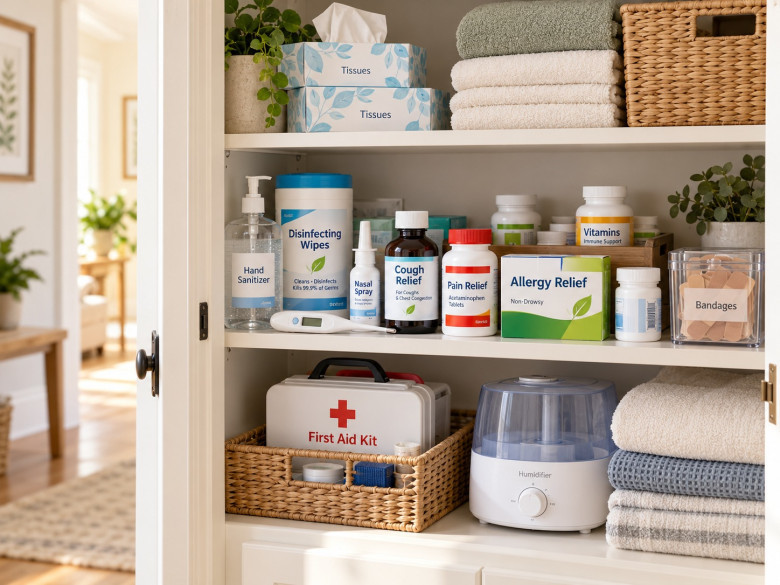
Useful cold and flu essentials may include:
-
Fever reducers
-
Saline spray
-
Tissues
-
Electrolyte drinks or powders
-
Thermometer
-
Hand sanitizer
-
Disinfecting wipes
When choosing medicine, check the label carefully and avoid doubling up on ingredients. Some multi-symptom cold medicines already include pain relievers or fever reducers, so it is important to know what you are taking.
Cough and sore throat support
A cough can make it harder to sleep, work, or take care of everyday tasks. Sore throat symptoms can also make eating, drinking, and talking uncomfortable.
For cough and throat support, consider keeping:
-
Cough drops
-
Honey-based products, if appropriate
-
Cough syrup
-
Saline nasal spray
-
Herbal tea
-
A humidifier
-
Soft tissues
A humidifier can be especially helpful when the air feels dry, but it should be cleaned regularly according to the product instructions. If it is not cleaned properly, it can create new problems instead of helping.
Allergy relief basics
Allergy season can look a lot like a cold at first. Sneezing, congestion, itchy eyes, watery eyes, and sinus pressure can make it hard to tell what is going on.
If seasonal allergies are common in your household, it can help to keep allergy relief products ready before symptoms peak.
Common allergy essentials include:
-
Antihistamines
-
Sinus rinse products
-
Tissues
-
Air filters
-
Gentle skin care for irritation
-
Travel-size allergy medicine for bags or cars
Allergy products can work differently from person to person, so it is worth choosing items that already fit your routine or that were recommended by a healthcare professional.
At-home monitoring and testing
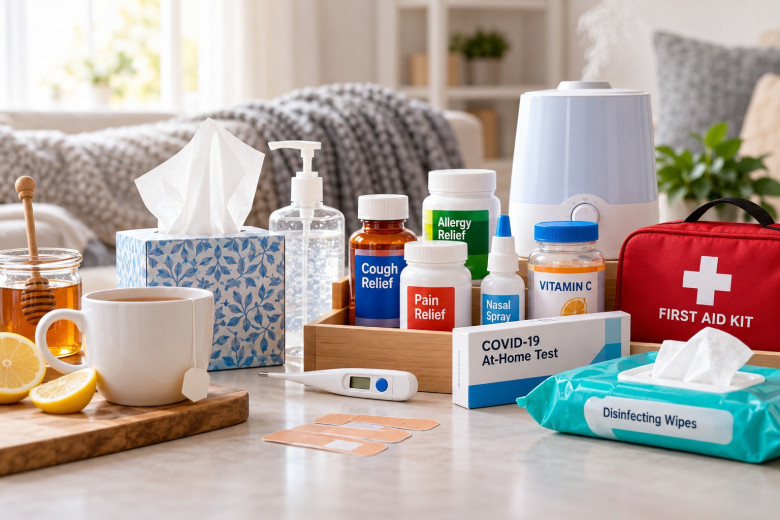
When someone in the house feels sick, a few basic tools can help you track symptoms more clearly.
Useful items include:
-
At-home COVID tests
-
Pulse oximeter, if recommended for your household
-
Blood pressure monitor, if relevant
-
Medication organizer
-
Notebook or app for tracking symptoms and doses
A thermometer is one of the most important items to keep on hand. At-home COVID tests can also be useful when symptoms overlap with cold or flu symptoms, or when you need to make decisions around work, school, travel, or visiting others.
For any serious, unusual, worsening, or persistent symptoms, contact a healthcare professional.
Comfort items for sick days
Not every useful item is medicine. Comfort basics can make sick days easier, especially when someone is resting at home.
Consider keeping:
-
Soft tissues
-
Lip balm
-
Electrolytes
-
Soup or easy meals
-
Herbal tea
-
Honey, if age appropriate
-
A reusable water bottle
-
Extra hand soap
-
Disinfecting wipes
-
Trash bags for tissues
-
Gentle moisturizer
Small items can make a big difference when someone is congested, tired, or dealing with a sore throat.
Kids' cold and wellness basics
If you have children at home, it is worth checking that your supplies match their age, weight, and needs. Children's medicines are not the same as adult medicines, and dosing instructions matter.
Useful family items may include:
-
Children's fever reducer
-
Children's cough or cold products, if age appropriate
-
Children's allergy relief
-
Kids' thermometer
-
Pediatric electrolyte drinks
-
Soft tissues
-
Saline spray
-
First aid supplies
Always read labels carefully and follow age and dosing instructions. If you are unsure what is safe for a child, ask a pediatrician or pharmacist.
First aid and general wellness supplies
Cold and flu season is also a good reminder to check the rest of your home health supplies. A basic first aid kit can help with everyday cuts, scrapes, minor burns, and small household accidents.
Consider restocking:
-
Bandages
-
Gauze
-
Antiseptic wipes
-
Antibiotic ointment
-
Medical tape
-
Hydrocortisone cream
-
Tweezers
-
Disposable gloves
-
Instant cold packs
-
Pain relief
-
First aid kit refills
This is also a good time to check vitamins, supplements, dental care, eye care, and other wellness products you use regularly.
Cleaning and prevention basics
When someone is sick at home, prevention is not perfect, but it can reduce some everyday spread.
Helpful items include:
-
Hand soap
-
Hand sanitizer
-
Disinfecting wipes
-
Surface cleaner
-
Paper towels
-
Tissues
-
Disposable masks, if needed
-
Laundry detergent
-
Trash bags
-
Air filters
Keep these items easy to access. If they are buried in a closet, people are less likely to use them when symptoms start.
Why it helps to restock before symptoms start
Waiting until someone is already sick makes everything harder. You may not have the right medicine. The thermometer battery may be dead. The tissues may be gone. The allergy medicine may be expired.
A quick seasonal restock can help you avoid that scramble.
Before cold, flu and allergy season, check:
-
What is expired
-
What is almost empty
-
What your household used most last year
-
What each family member may need
-
What should be kept in a travel bag, school bag, or work bag
-
What you want available for pickup or delivery if symptoms hit suddenly
Walgreens can be a convenient place to restock because shoppers can browse cold and flu items, allergy relief, first aid, vitamins, wellness products, beauty and personal care, household basics, and pharmacy-related services in one place.
Bottom line
A prepared home health shelf does not need to be complicated. Start with the basics: cold and flu relief, allergy products, a thermometer, at-home tests, tissues, comfort items, first aid supplies, and cleaning products.
Then adjust based on your household. Families with children may need age-appropriate medicine. Allergy-prone households may need seasonal products ready earlier. Busy households may want pickup or delivery options for fast restocks.
The best time to prepare is before symptoms show up. A small restock now can make the next sick day easier to manage.